-
 February 10, 2026
By Molly Hadeed, parent of Immaculate Heart Academy student
"Teach me to seek you, and reveal yourself to me as I seek, because I can neither seek you if you do not teach me how, nor find you unless you reveal yourself". St. Anselm
The role of a Catholic educator extends beyond academics to serve as a formator of virtue and character, helping students connect faith, culture, scholarship, and life. The complex, interconnected relationship among these pillars can be challenging to navigate or understand as a child, yet it is critical to shaping spiritual and intellectual development. As parents and educators, we want our children to experience the world through God’s love and, in turn, to love with the heart of Jesus, think with the mind of Jesus, and work with the hands of Jesus. This mission requires a school culture of faith-based innovation through education and a shared responsibility to instill the values of our Catholic faith through a holistic lens.
In the recent winter 2025 issue of Momentum, Dr. Chad Riley highlighted the critical role Catholic educators hold in guiding students to see divinity in the ordinary. The appeal to readers was straightforward yet complex in a world that continually strives to innovate learning through strategies and operations. Dr. Riley emphasized the importance of holding an innovative worldview by returning to a foundational principle: the Incarnation of Jesus. The Incarnation provides the underpinning foundation of hope and the beauty of God’s love in our everyday lives. To his point, Catholic educators are exceptionally blessed to integrate this principle into daily teaching. This assertion led me to reflect on my children’s school, realizing they are receiving an education that encompasses faith, global culture, and scholarship, with guidance on how to connect these pillars to serve throughout their lives.
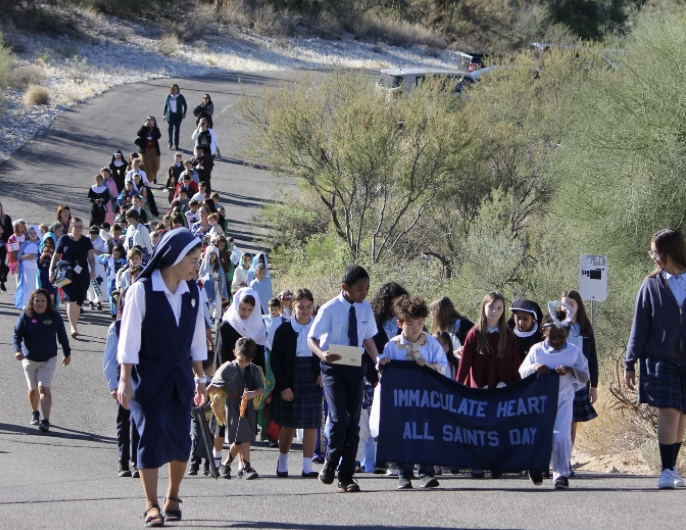
Immaculate Heart Academy, a Pre-K through 8th grade Catholic School in Oro Valley, Arizona, is a community of students, families, and educators who work together to support individual growth and collective wisdom through the integration of faith in daily school life. Since 1930, under the administration of the Sisters of the Immaculate Heart of Mary, the school has educated children in the community to grow as active Christians, pursue lifelong learning, identify personal strengths and weaknesses, practice temperance and good judgment, and solve problems. Immaculate Heart strives to meet these learning objectives by creatively integrating faith into the classroom while simultaneously teaching children to recognize the beauty of faith beyond a lesson plan.
Naturally, faith-teaching moments can arise in everyday interactions with students. At Immaculate Heart, they are also consciously interwoven into subjects. Particularly in middle school grades 6 through 8, students learn the seven principles of social justice (life and dignity of the human person; rights and responsibilities, option for the poor and vulnerable, call to family, community, and participation; dignity of work and the rights of workers, solidarity; and care for God’s creation) by actively engaging in service that supports the fair division of resources, opportunities, and privileges in their community. To tie their volunteer service with English Language Arts (ELA), students are asked to write persuasive essays on the seven principles of social justice. In addition to the logical reasoning skills required to write an argumentative essay, students give oral presentations on their essays, drawing on their service-learning experiences. While engaging in structured arguments, students also learn the wisdom of practicing devotion socially and communally to create a just society with the love and peace the Gospel calls from us.
Additionally, middle school teachers will collaborate on specific projects to hone skills across subjects. For example, the ELA curriculum will intentionally include literature and faith components, and History teachers collaborate with the religion curriculum to include the History of the Catholic church on the historic timeline. In 6th grade, students are asked to write a report about a Saint of their choice, following guidelines that emphasize the mastery of ELA, historical accuracy, and the telling of the Saint’s religious vocation. Multi-subject collaborations lend to the school’s mission to educate the whole child, fostering personal and spiritual growth.
Across grades, teachers excel at providing children opportunities to see how faith calls us to integrity, perseverance, and kindness. Physical Education class ends with prayer and a compliment circle to remind children to apply their faith through good sportsmanship and encouragement. In Spanish class, all Kindergarten through 8th grade students discover language through faith and culture. Every lesson provides an occasion to connect Gospel values with the beauty of the Spanish language. For example, Spanish prayers, music, religious art, and meaningful traditions like Día de los Muertos and Día de Todos los Santos are taught through a lens of love, respect, and faith.
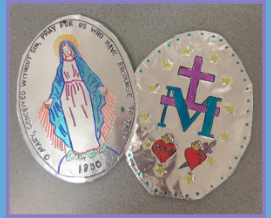 An exemplary model of integrating faith into the school curriculum is the art room at Immaculate Heart. Each lesson in the art room begins with a prayer, “offering [our] talents” to God and giving thanks for the “gift of art”. While many art lessons are intentionally Catholic, those that are not naturally progress into faith-based discussions. As such, art analysis and artist background discussions provoke dialogues of how artists may have demonstrated Cardinal virtues. For example, artist Claude Monet was publicly humiliated and insulted by others’ reviews of his art. The children learn that instead of giving up, he persevered and exhibited fortitude to continue creating his art.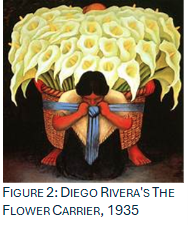
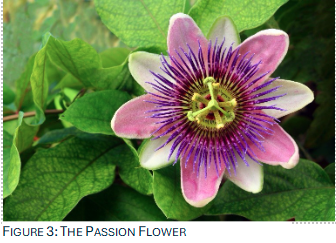
Symbolism in art is a tool for explaining specific historical events and an opportunity to stress the significance of sacred images. For example, children learn that Leondardo DiVinci placed the vanishing point of linear perspective at the head of Christ in his depiction of The Last Supper, which sparks conversation about the meaning and symbolism of drawing the eyes to Christ. Other examples of visual catechesis help fuse art history, faith, and culture together. Artist Diego Rivera’s The Flower Carrier resembles Christ on the cross, but through a village feast day procession. Children are taught to critically view art for connection to Christ and orientation to faith. To practice these skills, students create their own art, drawing on their knowledge of symbolism to imbue their faith with more profound significance. For example, students draw their own still life of a Passion Flower, making direct connections of each part of the flower to Christ’s Passion: The Crown of Thorns, The Three Nails, The Five Wounds, and The Ten Loyal Apostles. Passion Flower symbolism helps teach the Gospel visually and represents how Christ’s sacrifice can be observed in our natural world.
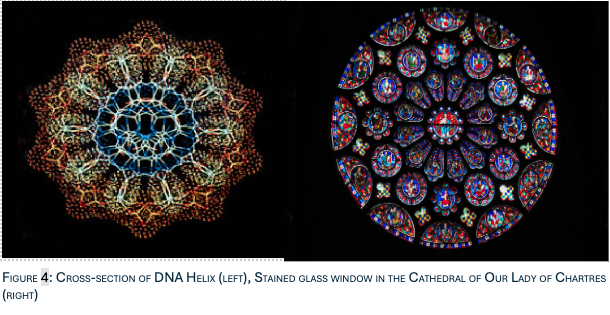
The beauty of life, science, evolution, and art surrounds us, but it can be challenging to teach without the eternal hope and love of our faith. Innovative teaching requires a fundamental connection to Christ, opening the eyes and ears of our future generations to seek God’s love in their environment and to return to the foundation of the Incarnation. My favorite example of this is the side-by-side comparison of a cross-section of the DNA helix and a stained-glass window from a Cathedral. Children analyze the similarities and beauty between each picture and make the underlying connection between our human bodies and the outward beauty of created art.
I will praise you Lord, for I am fearfully and wonderfully made! Psalm 139:14.
Education is critical to self-discovery and self-realization. At Immaculate Heart, gospel values shape the school day, and Catholic identity is seamlessly woven through academic instruction. Collaboration across subjects helps children connect their faith, culture, and scholarship to their lives, both in and out of school. These exemplars are just some of the approaches educators can use to engage Catholic faith through educating the whole child.