
Search
-
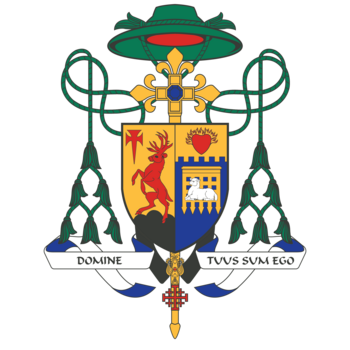 February 17, 2026Compiled by the Diocese of Kalamazoo
The process of selecting the next bishop involves several individuals at every level, beginning at the diocesan level, and it can take several months to years. It is a highly confidential process.
The steps, as provided by the United States Conference of Catholic Bishops (USCCB), are as follows:
Bishop’s Recommendations
Every bishop may submit to the archbishop of his province the names of priests he thinks would make good bishops. Following a discussion among the bishops of the province, a vote is taken on which priests to recommend. The archbishop then forwards the list to the apostolic nuncio in Washington. It is also submitted to the USCCB.
The Apostolic Nuncio
By overseeing the final list of names forwarded to Rome, the apostolic nuncio plays a decisive role in the selection process. He gathers facts and information about potential candidates and interprets that information for the Congregation of Bishops. Great weight is given to the nuncio’s recommendations, but it is important to remember that his “gatekeeper” role does not mean that his recommendations are always followed.
The Congregation for Bishops
Once all the documentation from the nuncio is complete and in order and the prefect approves, the process moves forward. A cardinal relator is chosen to summarize the documentation and send a report to the full congregation, which generally meets twice a month on Thursdays. After hearing the cardinal relator’s report, the congregation discusses the appointment and then votes. The congregation may follow the nuncio’s recommendation, choose another of the candidates on the terna (list of three candidates) or even ask that another terna be prepared.
The Pope Decides
At a private audience with the Holy Father, usually on a Saturday, the prefect of the Congregation for Bishops presents the congregation’s recommendations to the Holy Father. A few days later, the Holy Father informs the congregation of his decision. The congregation then notifies the nuncio, who in turn contacts the candidate and asks if he will accept. If the answer is yes, the Vatican is informed, and a date is set for the announcement.Vocab lesson From A to Z
Apostolic Nuncio — Also referred to as the “papal nuncio,” he is a Vatican diplomatic representative with the rank of ambassador. In addition, the nuncio is the personal representative of the Holy Father to the bishops of the country.
Holy See — The terms “Holy See” and “Apostolic See” refer to the governance of the Universal Church under the Petrine ministry centered in Rome. “Holy See” is the more commonly used term.
Layman/Woman/Person, The Laity — Each member of the Church becomes part of the laity at Baptism, sharing in the common priesthood of all Christians. Ordained ministers of the Church cease to be laypersons and enter the clerical state.
Ordination involves the conferring of Holy Orders. In Catholic churches as well as in Eastern and Oriental Orthodox churches, ordination can be administered only by a bishop in a line of apostolic succession dating back to the Apostles.
In the ordination of a bishop, there are usually at least three bishops performing the consecration — one as principal consecrator and two as co-consecrators. Just as in priestly ordinations, it is the bishop’s imposing of hands on the head that expresses the outpouring of the Spirit and effects the sacrament of orders. After the principal consecrator, all the bishops present do the same.
Through his ordination, a bishop becomes a member of the College of Bishops throughout the world. His call is to be involved in working not only for his own diocese, but for the spiritual and social welfare of all people of the world.
Papal Bull — An official document or proclamation issued by the Pope. [history: A “bulla” was originally a circular plate or boss of metal, so called from its resemblance in form to a bubble floating upon water (Latin bullire, to boil). In the course of time the term came to be applied to the leaden seals with which papal and royal documents were authenticated in the early Middle Ages, and by a further development, the name, from designating the seal, was eventually attached to the document itself. —New Advent]
Zucchetto — Skull cap worn by the Pope (white), cardinals (red) and bishops (purple).